I designed the model below in which you can see some symbols within a lovely lotus flower. It represents self-regeneration even if it is in adverse conditions; their buds are beautiful. The colour of their petals is sparkling, and it blooms in different environments. For some cultures, this flower means the rebirth to a new stage to cope with new challenges.
For that reason, I compare it with my students because they are one-off and create a magic universe around us. Students can demonstrate their skills in all our curriculum as well as improving every single day. As a teacher, we have to foster them to make the process of metacognition for recognising their learning and assess the goals reached. During this part, they discover their strengths and weaknesses that are essential to keep moving to the next step. It means they realise they improve in all their abilities and are bright in different contexts only if students trust in the owner power that they genuinely have to be better as human beings.
The graphic below will help students to understand their self-assessment in the approaches to learning.
https://drive.google.com/file/d/1xCEAZQxP2ywgd5C-dZas1JAfo_6oWLMm/view
Each petal has six icons that show the path to reach the image's top in the unit of inquiry. Each pupil will ask in which place is according to their skills, and they will colour the symbol. Finally, It will be a process to be developed throughout the unit.
ATL student self-assessment

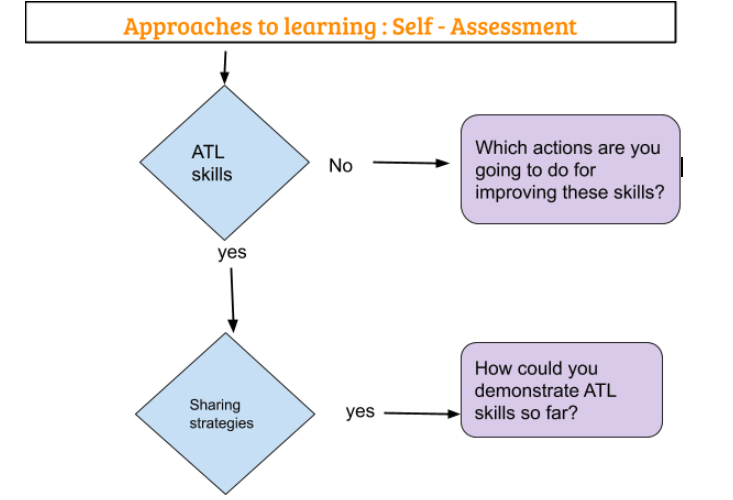
FLOWCHART
This flowchart involves students understanding their process to assess ATL skills. It helps them to organise and structure their insights. Likewise, they can share the results with the entire class to overcome obstacles. The flowchart fosters the curiosity and interest of students, being better in each ATL skills as well as helping in their cooperative groups, and the role of the teacher is to encourage students to provide feedback to their classmates.