Monday, October 19, 2020

Using Self- Assessment for students

I have spent time creating new ways to assess ATL skills, especially for primary students. It is inspiring for me, developing approaches to learning in my pupils from different settings. The most amazing is to see how my students are engaged to commit various learning experiences. In the previous article I talked about “ATL skills: Self- Assessment” and now I want to show you how my third-grade students were working in this model.


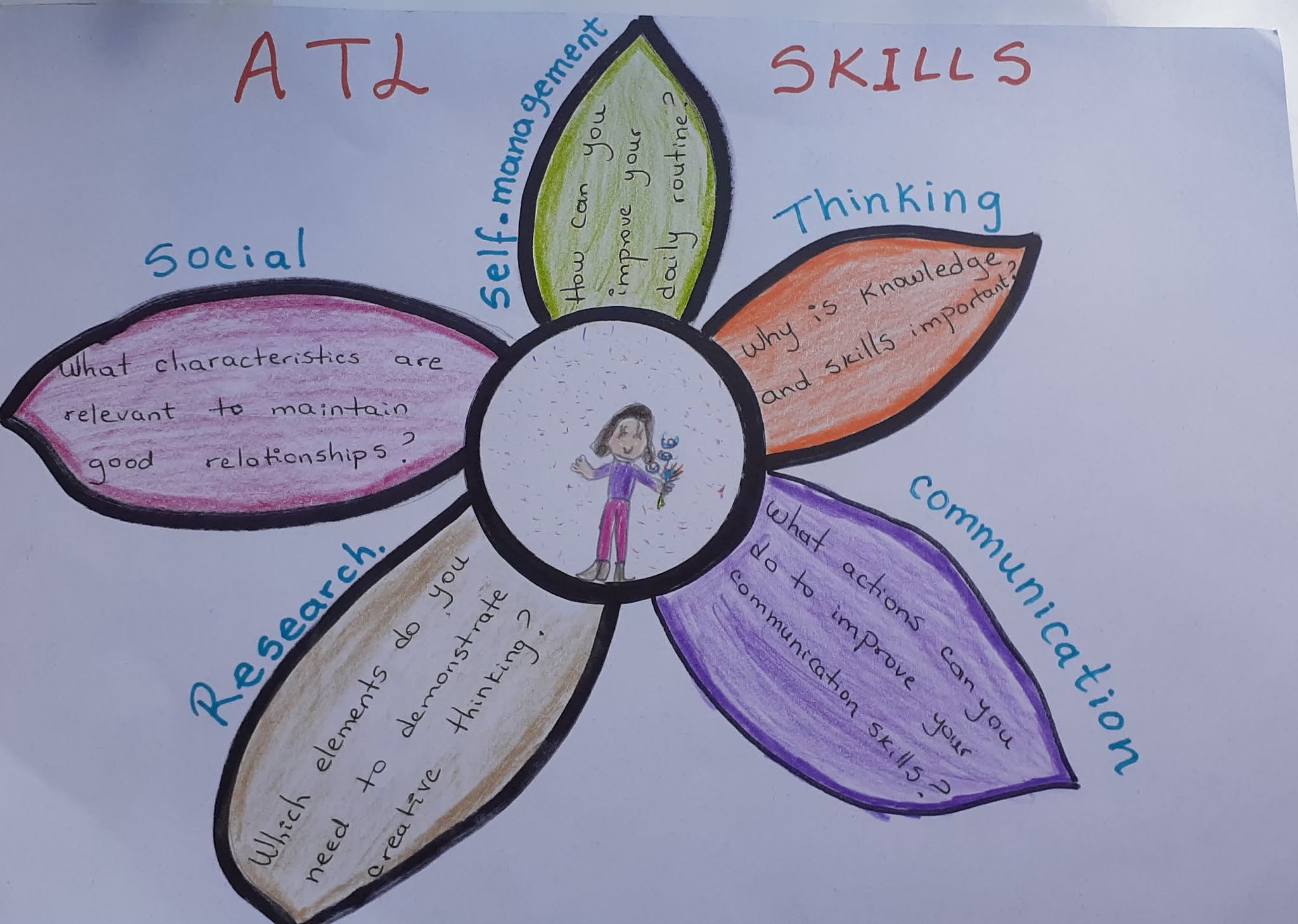
At first, I explained the intention of this experience and the reasons self-assessment is vital to reflect on their own learning. Then, they focus on working in this strategy, in which some pupils decide to create the same lotus flower or another image that could represent the ATL skills. I encouraged learners to elaborate a picture with the five elements of the approach to learning, and I added to write five concrete actions to improve for the next unit inquiry. I asked my group of students to make an image of how they could illustrate their skills. They felt cheerful for doing something that they like, showing enthusiasm to elaborate on their own task. 


self- assessment


This challenge demonstrated agency in the development of a creative task. Learners could show an active role in the development of this learning experience; thinking about the best image to represent the approaches to learning and at the same time, they had time to present the innovation task to their classmate. All students involved in sharing their piece of work with the entire class. In this case, kids had an active voice in which they created thoughts or ideas about their own learning throughout the unit of inquiry because pupils loved to make decisions by themselves. They took responsibility for their own learning, and at the same time, they could reflect on their strengths and weaknesses


I believe it is essential to create an environment in which our students show their initiative as an opportunity to build progress in their ATL skills. This learning experience was an effective way to foster our students to be knowledgeable about their own performance with our support. As well as to make connections between each approach to learning to be a better human being.


Saturday, September 5, 2020

Online Learning Platforms


online platform


At the onset of the pandemic, teaching online platforms could be challenging for teachers. We need to adapt lesson plans to reach the aim for all our students. However, it is something that we can overcome with all staff, and we have designed compelling learning experiences according to the needs of students. It is essential to start knowing students to engage in each experience of learning; rather than keep moving to the next lesson. We are aware that they have a new style of learning in which we have to create a comfortable environment, so I've figured out how students are adapting to learn quickly to different circumstances; they have been studying from home with a great attitude, and full of energy to explore another way of visualising the world.


I consider it is relevant to motivate our students at the beginning of each session because we can establish rapport to activate their minds, they only engage in our learning experiences if we ignite curiosity to learn a new perspective of the diverse topics. From my experience, students have shown ATL skills in our virtual encounter and developed new ways to interact in this media, even though I conclude we need to include some ways to strengthen them in this current setting.


Here you can find some free useful platforms put forward in your lesson plans:


Padlet:


This toolkit is terrific to post information with your students based on your unit of inquiry. It is an excellent opportunity to work cooperatively with them and give meaningful feedback. When you work with Padlet, encourage students to participate in each task suggested, as well, you foster them to answer some questions and write some comments to their classmates. 


Popplet:


Students will feel comfortable when using this tool because they have the chance to be creative in designing interactive graphic organisers. They can insert videos, images, and change the style of each box. This tool helps students to interact with other peers because they can share the document. It can be shared with Facebook Twitter, email, link and embed. Here you can see a model made by one of my students based on the related concept of volcanoes.


It is one of the available tools on Google's G-Suite. Students and teachers are used to explaining and sharing insights, insert check marks, as well as draw into the same or different online whiteboard. We can assign and collaborate with the same board and, building an understanding of each learning experience. 


Socrative:


It is a platform based on questionnaires, where formative quizzes and assessments can be performed in various ways: multiple-choice, team play, starting cards, true/false or short answer questions. It records the data and displays graphs with results. It has access for students and another for teachers. To connect to students, you only need to type the name of the class in which you appear on the teachers´ screen.


Kahoot:


This platform is based on questionnaires. The teacher can design the questions, or you can also choose between the quizzes already created by other users according to the subject matter or duplicate one already designed and modify it. Students join the game through a PIN. It is lovely for students who want to interact and show results online as a game.


Loom:


If you want to create your video, the loom is an excellent option for interacting with your students as well as it could be a good way to feedback them. You can set up your record with chrome extension and download your videos.


I hope my colleagues have found different ways to surpass this current situation. The most significant is to teach our students how to move forward in the inquiry process. To make this happen, we should know the objective of learning and reflect on which skills will be developed throughout the unit. Likewise, we should use some platforms to encourage students to take responsibility for their learning. For example: if you want to use Padlet the possible approaches to learning will be: 

Thinking Skills: critical thinking: analysing and evaluating ideas and resources

creative thinking: generating new ideas and considering other perspectives.

Research skills: Information management: ask questions, record data, interpret texts and resources.

Communication skills: Exchanging information. Reading comprehension or giving instructions.


Wednesday, August 19, 2020

ATL skills: Self- Assessment


self- assessment


I designed the model below in which you can see some symbols within a lovely lotus flower. It represents self-regeneration even if it is in adverse conditions; their buds are beautiful. The colour of their petals is sparkling, and it blooms in different environments. For some cultures, this flower means the rebirth to a new stage to cope with new challenges. 

For that reason, I compare it with my students because they are one-off and create a magic universe around us. Students can demonstrate their skills in all our curriculum as well as improving every single day. As a teacher, we have to foster them to make the process of metacognition for recognising their learning and assess the goals reached. During this part, they discover their strengths and weaknesses that are essential to keep moving to the next step. It means they realise they improve in all their abilities and are bright in different contexts only if students trust in the owner power that they genuinely have to be better as human beings. 


The graphic below will help students to understand their self-assessment in the approaches to learning.  


https://drive.google.com/file/d/1xCEAZQxP2ywgd5C-dZas1JAfo_6oWLMm/view


Each petal has six icons that show the path to reach the image's top in the unit of inquiry. Each pupil will ask in which place is according to their skills, and they will colour the symbol. Finally, It will be a process to be developed throughout the unit. 


ATL student self-assessment


Model self- assessment


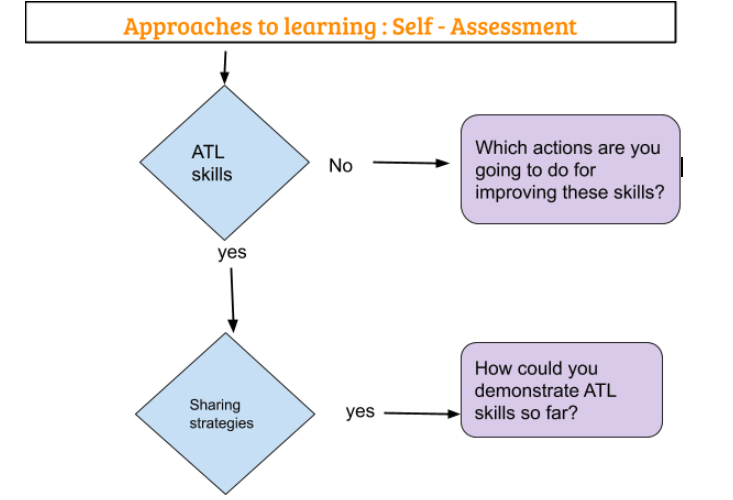
FLOWCHART


This flowchart involves students understanding their process to assess ATL skills. It helps them to organise and structure their insights. Likewise, they can share the results with the entire class to overcome obstacles. The flowchart fosters the curiosity and interest of students,  being better in each ATL skills as well as helping in their cooperative groups, and the role of the teacher is to encourage students to provide feedback to their classmates.


Flowchart self- assessment

Friday, July 17, 2020

Feedback focus on students


feedback on students


We work as a collaborative team, sharing useful strategies to deliver in our online environment. I asked about how I can provide helpful feedback to all my students; it doesn't matter if they are expert or beginning students. They need the same opportunity to reflect on the process done during the unit of inquiry. Also, I was a learner; feedback helps me to make some adjustments to reinforce my skills and methodologies.

I'm thrilled to support my students in the development of skills, knowledge, concepts, and IB learners profile attributes to improve their learning assessment. For that reason, I designed a model in which students analyze some questions according to ATL skills. Focus on encouraging them to undertake an internal dialogue to recognize the next steps and how to take them.


Feedback focus on students


This image motivated them to reflect on how to improve their skills. For me, it was crucial to observe their strengths and perspectives while answering these questions. Because they are responsible for their knowledge in a specific context, with this in mind, my students are aware of how they have improved knowledge and skills by themselves. At this point, they`ve made sense of the feedback and focus on their learning more than correct a task. Once, they assume their responsibility in the process of learning, and we can introduce written and oral feedback.

Saturday, July 11, 2020

ATL skills during COVID-19


approaches to learning


I'm cheerful to work at PYP school in which all support me to explore new strategies to help our students in those days of the pandemic. We reflect on how to keep working on ATL skills online sessions and create effective lesson plans for the new requirements to the benefit of our students and the community. First, as an educator, we focus on developing self-management skills. For example, we set up a daily routine format. Helps our students to build organization and state of mind skills. Every day, learners complete the following statements: 

- Writing daily gratitude.
- Creating activities to do every day.
- Designing some exercises to do on the screen breaks.

We encouraged them to share their daily routine with the entire class, and at the same time, they had the chance to change some habits to enhance managing time and bring tasks on time. They designed effective strategies, such as schedules with different colours to remind them of their functions, checklists, keep a master calendar, set a designed study space. It helped them to feel comfortable in the development of all learning experiences. Also, they analyzed their advances in different tasks in which they showed organization and time management skills. Below two questions to encourage them:


But as a teacher, I also think we need to focus on state of mind skills. For that reason, I was aware of the importance to monitor each of our students in online sessions. Students need to be motivated to express their feelings, and our responsibility is to support each one. We provided them with different learning experiences to enhance their ATL skills. Because one of the essential points in our students is to establish proper emotional management and self-motivation. How have we contributed to these skills? Demonstrating life has unique moments, and we have to cope with a positive attitude all of them. We included some learning experiences to be aware of the importance of these aspects in our online sessions:

- Showing gratefulness to their family and teachers.
- Answering questions related to self-management skills.
- Designing creative tasks.
- Workshops focus on positive relationships with peers.
- Telling stories about their family and friends. 

I've also suggested building confidence in the students by listening attentively to them, monitoring all the time, praising their goals, being patient and showing enthusiasm with all their comments. In some cases, we need to communicate with our students individually for knowing the reason they are absent in the dynamic of the classes. Effective communication is essential to engage our students in the development of self-management skills. Finally, teaching in a virtual environment has been fantastic for me, because I have explored some useful resources to keep updated. At the same time, I have supported my students in the development of skills. During the process, they demonstrate how they have enhanced their routine, habits, building rapport with peers.

What self-management skills do you consider that online students need to develop? 


Photo credit: original answer from one student.